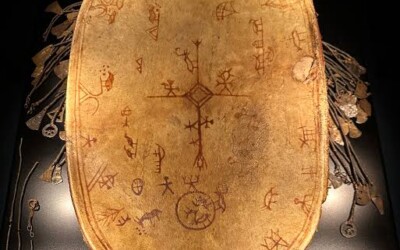
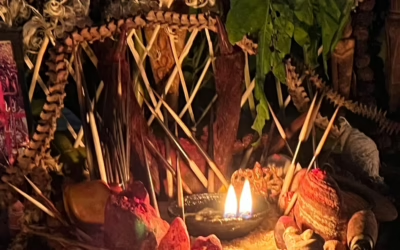
There is more to the Altar than meets the eye. Many times, we take it for granted, or simply admire the decorative aspect of someone else’s creation—usually that of the shaman or teacher. The mesa, or altar, functions as the anchor and source of the shaman’s inner power. Upon it, the shaman arranges sacred objects—Huacas (or Wakas)—natural or human-made items that contain spirit energy. A deep relationship with these objects amplifies the shaman’s ability to heal and to invoke the help of benevolent spirits. Let’s explore what an Altar really is.
There are at least four different kinds of altars:
Community Altar (Ground altar)
The shamanic altar is more than just a decorative object or a showpiece—it is a living gateway to the spirit world. It serves as a portal into non-ordinary reality, often described as the Shamanic State of Consciousness (SSC). Through intention, communication with spirit, and inner vision, it opens pathways to insight and guidance.
Building a large community altar with natural materials—such as flowers, fruits, grains, and earth—the four sacred elements: Earth, Fire, Water, Air—reflects the universe, mirrors inner consciousness, and serves as a sacred space where order can emerge from chaos, inspiring and empowering both individuals and the community.
As individual visions are woven into a shared sacred structure, and as the group practices deep listening, alignment, and reverence, differences become teachers. Disharmony may arise—and can be gently released. Once completed, the altar becomes a living, energetic field—a portal that supports further journeys, divination, guidance, and the retrieval of what has been lost, forgotten, or displaced. No community ceremony or ritual is complete without a properly created and maintained altar.
For Setting the Ground Altar
Bring a traditional woven reed mat or woven woolen cloth to use as the base. Consider carefully the colors of the items you place upon it:
Yellow for the Sun’s color—new beginning, optimism.
Red for feminine energy and passion.
Pink for young feminine energy and innocence.
White for masculine energies, spirituality, and purification.
Green—made of yellow and blue (spirit)—for growth.
Orange—made of yellow and red—for new beginnings and passion expressed as creativity.
Items to Create a Powerful Floor Altar
Grains: wheat, barley, corn, beans, oats, rice — embodying the promise of the seed to break through darkness into the light, manifesting as plant and tree.
Fruits: apple, orange, mandarin, mango, banana, pineapple — symbolizing the fruits of our work.
Vegetables: seasonal vegetables, potatoes (corn stalks, green branches, etc.) — also symbolizing the fruits of our work.
Flowers: red and white roses, or carnations, and other vibrant blooms — symbolizing the present flowering of your past work and efforts.
Huacas: personal amulets, stones, seashells, feathers, bones, significant effigies, or special objects that carry emotional importance.
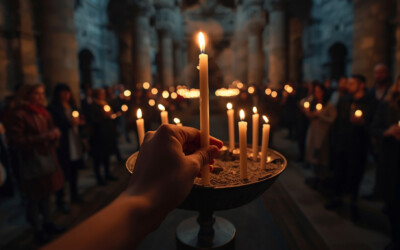
Candles: white only, preferably in glass cases, placed in the center and in each direction, symbolizing the connection to spirits.
Smudging bowls: ceramic ones work best, placed in each direction to remove all negative energy and send it upward.
Water bowls: ceramic or glass—creating a connection to the element of water, the emotional, feminine energies.
At the end of the ceremony, participants are welcome to take items from the altar home.
The Three Major Shapes of Ceremonial Altars in Andean Shamanism
The spiral is a powerful symbol of life’s non-linear journey, representing ongoing change, transformation, and the interconnectedness of all existence. It signifies moving through the same life experiences repeatedly, but at a higher level of consciousness—symbolizing growth, rebirth, and the soul’s journey, rather than a closed circle.
Its shape resembles that of the serpent, the anaconda—the ruler of the Uku Pacha (the lower world), and the ancestors. If it turns clockwise, toward the Sun direction, it expands, opens, and activates the circle. If it reverses, counterclockwise, its energy contracts and moves deeper into self-reflection.
Circle
The circle is the earliest and most fundamental symbolic language of the Earth. It embodies Pachamama’s shape, reflecting the roundness of the Sun, the Moon, and the Earth beneath your feet.
Gathering in a circle signifies recognizing that life moves through sacred cycles—the changing of seasons and the rhythm of birth and rebirth—rather than following a straight line.
By choosing this form, you create a “Medicine Wheel,” a living and protective space that connects the physical world with the spiritual realm.
In this sacred space, the walls of hierarchy dissolve. Because a circle has no beginning and no end, there are no teachers or students—only equals. Every face is visible to the fire, to the ancestors, and to the eyes of those standing across from them. Here, the past remains behind us as we focus on the present heartbeat of the collective.
This unity allows Ayni, the law of sacred reciprocity, to flow like water between every heart, reminding us that we must give as we receive to maintain the balance of the whole.
When you place your Mesa at the center of this ring, you create a focused link for spirit. Like the skin of the kultrung drum, the circle becomes a vessel that holds your intentions and prevents your collective power from scattering.
This tradition is etched into the very stones of the Andes, echoing through thousands of years of ceremony in ancient sunken plazas. By honoring this shape and holding hands as one, you ensure that your rituals remain centered, and that every prayer you offer contributes to the healing and wholeness of all.
The Chakana, the Andes Cross, is your living map—the sacred bridge, the steps connecting the three worlds. It is more than just a symbol; it is an altar where the breath of the heavens meets the pulse of the Earth.
When you sit before it, you stand at the threshold of the three great realms: Hanan Pacha, the celestial heights of the gods; Kay Pacha, this vibrant world of human life; and Uku Pacha, the deep world of the ancestors. To understand the Chakana is to realize that you are the thread woven between these layers.
Let the twelve points of the cross guide you through the cycle of the stars and the soil. They represent the twelve months—the Earth’s seasonal breaths—teaching you when to plant a seed of intention and when to harvest the fruits of your spirit.
Everything in the Chakana symbolizes Ayni, the sacred law of reciprocity. Just as the arms of the cross extend in symmetry, so must we give in order to receive. This balance is the essence of all healing; it is Yanantin—the harmonious dance of masculine and feminine energies, light and shadow, where neither dominates.
As you lead your community, focus their attention on the hollow center—the Cusco, the “Navel of the World.” This is the sacred void, the portal where time pauses and all directions meet. It is here, in the stillness of the heart center, that the gateway to the unknown is found.
By grounding your ceremony in the geometry of the Chakana, you are not simply performing a ritual—you are aligning the community’s heartbeat with the ancient rhythm of the cosmos, ensuring that every prayer is carried across the bridge to the stars.
Co-Creating the Sacred Shamanic Portal
It is important to begin the co-creation process of the Community Altar even before the event or workshop begins. You might even consider making this process itself the full workshop, as it unfolds deep personal and collective healing lessons waiting to be recognized and accepted.
This work can be challenging for a group, especially when participants arrive as strangers—each carrying different backgrounds, experiences, and levels of shamanic understanding. They are asked, gently yet firmly, to build trust, to find a shared rhythm, and to step into a sense of group identity. Naturally, there will be as many creative visions as there are participants.
This is not a problem—it is the teaching.
The process becomes a living exercise in community building, humility, deep listening, and sacred collaboration. It invites a democracy of the heart, where ideas are shared and shaped without fragile egos or hidden agendas. It asks each person to remember an ancient indigenous knowing: that the whole is greater than the sum of its parts. This stands in quiet contrast to the Western conditioning that places the “Me” before the “We.”
The teacher or shaman prepares the necessary ingredients—or, more powerfully, invites participants to bring them. In doing so, each person is called to choose consciously, to reflect on what they offer, and to arrive already in relationship with the altar they are about to help co-create.
We begin by exploring the art and purpose of the shamanic altar—not as decoration, but as a living gateway to the spirit world.
Participants are guided into non-ordinary reality—the Shamanic State of Consciousness (SSC)—where intention, communication with spirit, and inner vision open pathways to insight and guidance of the altar’s purpose and shape.
Through guided journeys, inspiration arises. Hands begin to move. The altar takes shape using natural materials—flowers, fruits, grains, stones, and elements of the earth. What is created is not random—it is revealed.
The altar becomes a reflection of the universe, a mirror of the inner group’s consciousness, and a sacred space where order can emerge from what once felt like chaos—empowering both the individual and the collective field.
As individual visions are woven into a shared sacred structure, the group practices deep listening, alignment, and reverence. Differences become teachers. Moments of disharmony may surface, and when held with care, they are gently released.
And then, something shifts.
Once complete, the altar is no longer an arrangement of objects—it becomes a living, energetic, magnetic field. A portal. A presence. It supports further journeys, divination, guidance, and the retrieval of what has been lost, forgotten, or displaced.
No community ceremony or ritual is complete without a properly held and maintained altar. It is the heart of the work—the place where the visible and invisible meet, and where the community remembers itself as one.
There are three different kinds:
- Personal Altar — a personal space with special Huacas and elements meaningful to the shaman, not necessarily meant to be displayed. Usually located in private space, sometimes covered. This is where personal prayers are made.
- Portable Altar — when travel is required for house visits or land clearings. A square cloth (often red, symbolizing the power of the earth) holds selected stones and essential tools. Each corner is tied to create a bundle that is easy to carry.
- Working Altar — in your healing room, designate a table as your Mesa. Place your stones, sacred items, and candles. The arrangement reflects the inner order of the universe you seek to create, similar to feng shui. This order is usually maintained unless cleansing or resting the stones.
The altar must be regularly energized through prayers, smudging, feeding, spraying, and decorating with flowers. Huacas can be renewed by soaking them in seawater overnight, placing them under the full moon to absorb feminine energy, or under the midday sun to attract masculine solar energy—thereby restoring their balance and power.
Setting Up the Altar
Perform this ceremony facing the East, toward the rising Sun—preferably at sunrise on a Tuesday or Friday.
- Spread a red cloth (symbol of Pachamama’s life force)
- Place a candle in a glass container for safety
- Arrange sacred objects in a meaningful way—consistency strengthens their energy
- Scatter red and white carnation or rose petals for harmony and balance
- Offer small foods—chocolates, fruits, candies, or coins—to feed the spirits of the Huacas
The Ceremony
- Open by calling the Four Directions:
East — Taita Inti, Father Sun, Condor
South — Pachamama, Mother Earth, Anaconda
West — Mama Killa, Grandmother Moon, Bear
North — Jatun Pachakamak, Great Creator, Human Ancestors - Sing your soul song and offer prayers
- Blow Trago (sugarcane rum) gently through your lips, creating a fine mist to bless the altar
- Smudge with palo santo, sage, cedar, or pine—circling your right hand nine times clockwise to open space, then your left hand nine times counterclockwise to release negativity
- Blow Agua de Florida over the stones and sacred items to cleanse and nourish them
- Offer tobacco smoke, sending blessings and gratitude to the spirits
- Ring a bell or rattle to harmonize and close the circle
Maintaining the Altar.
Your Huachas and other objects absorb a lot of energy, both positive and negative. From time to time, they need to rest and be recharged. Dip them in sea salt water overnight and place them on your windowsills to absorb the sunlight, masculine energy, and the full moon feminine energies.
And remember. The altar is not something you build once. It is a living entity, something you enter into a relationship with. Again… and again… and again. And over time… It begins to speak.


Itzhak…Much appreciated offering. A very comprehensive compilation. A must for my “reference library shelf”.
AHOOHEE! (many thanks)